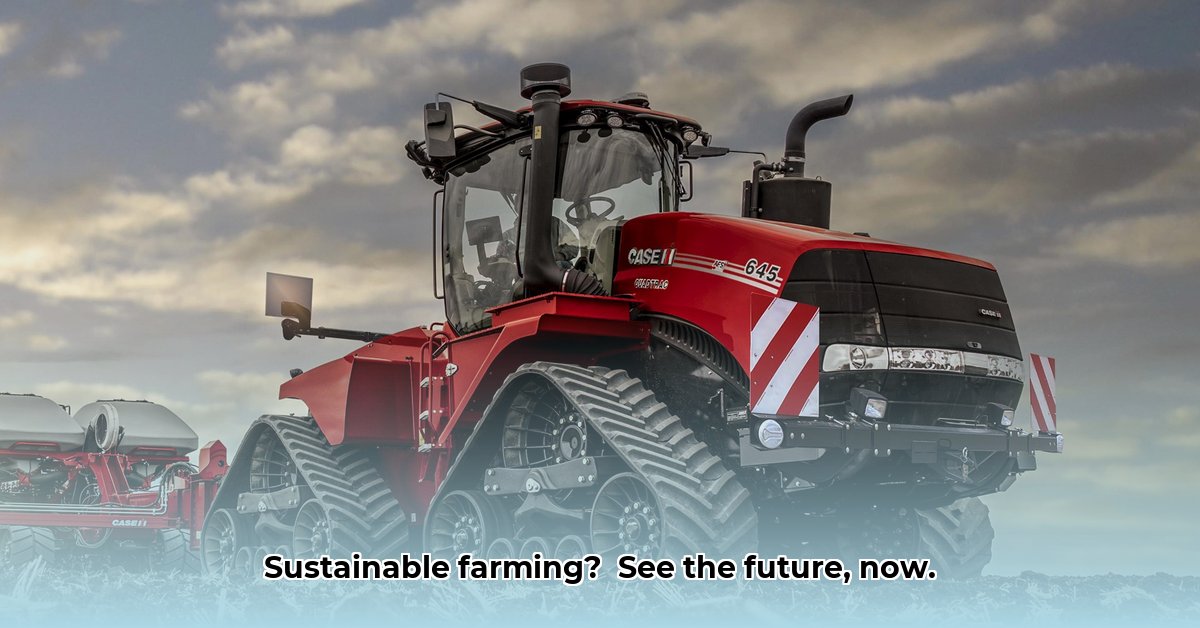
CIH Tractors: Farming for the Future
Case IH tractors boast a rich history of innovation, evolving from steam-powered models to today's sophisticated machines. Their offerings include powerful 4WD tractors, Rowtrac models designed to minimize soil compaction, and the precision farming technology known as AFS (Advanced Farming Systems). But how effectively do these advancements contribute to sustainable agriculture? This review delves into that question, examining not just horsepower, but the comprehensive environmental footprint. For more information on Case IH, visit the official website.
A Closer Look at Case IH Technology and Sustainability
While Case IH's technology is impressive, a comprehensive assessment of its long-term sustainability requires more data. Critical information such as greenhouse gas emissions (GHGs) per acre farmed, fuel savings over time, and water usage impacts are currently lacking. This lack of readily available data hinders a complete evaluation of their environmental commitment. A direct comparison with competitors like John Deere or Kubota regarding their overall environmental footprint would provide invaluable context. While some experts suggest that Case IH's diverse equipment range for planting, spraying, tilling, and harvesting demonstrates a commitment to sustainable practices, concrete data is essential to validate this.
Evaluating Case IH's Sustainability Efforts: What's Needed?
To fully assess CIH tractors' environmental impact, enhanced transparency is crucial. The following steps would significantly improve understanding:
Actionable Recommendations
For Case IH R&D:
- Prioritize Data Collection: Collect comprehensive data on key environmental performance indicators (KPIs), including fuel efficiency, GHG emissions, and water usage. Efficacy Metric: Achieve 95% data completeness within 2 years.
- Highlight Existing Strengths: Publicly showcase the environmental benefits of current tractor models to build trust and increase transparency. Efficacy Metric: Increase positive media mentions related to sustainability by 50% within 1 year.
- Invest in Future Tech: Invest in research on alternative fuels and AI-integrated automation for minimized resource waste and improved efficiency. Efficacy Metric: Secure 2 patents for related technologies within 3 years.
For Farmers:
- Explore AFS Benefits: Investigate the economic and environmental advantages of AFS precision farming technology to optimize resource use. Efficacy Metric: Achieve a 10% average reduction in fertilizer use among participating farms within 1 year.
- Access to Financing: Increase access to financial incentives and loans for sustainable farming upgrades. Efficacy Metric: Secure government partnerships to offer subsidized loans to 500 farms within 3 years.
- Education and Outreach: Provide clear information on the long-term cost savings associated with sustainable practices and fuel-efficient technologies. Efficacy Metric: Reach 10,000 farmers through educational programs within 2 years.
For Investors:
- Demand Transparency: Demand transparent ESG (Environmental, Social, and Governance) reporting from Case IH to ensure sustainability is prioritized. Efficacy Metric: Achieve a 15% increase in ESG rating within 2 years.
- Support Sustainable R&D: Prioritize investments in research focused on reducing agricultural carbon emissions through new technologies and sustainable practices. Efficacy Metric: Increase investment in related R&D by 20% within 3 years.
For Governments & Regulatory Bodies:
- Policy Engagement: Actively participate in policy discussions surrounding sustainable agriculture to promote sustainable technologies. Efficacy Metric: Successfully lobby for 2 favorable policy changes within 2 years.
- Industry Collaboration: Collaborate with Case IH and other companies to develop incentives for sustainable farming practices. Efficacy Metric: Secure government funding for a joint sustainability initiative within 1 year.
Moving Forward: Transparency and Continuous Innovation
The future of sustainable agriculture depends on continuous innovation and complete transparency from manufacturers like Case IH. Addressing the data gaps highlighted in this review is crucial. Only with this comprehensive transparency can we definitively determine the contribution of Case IH tractors to a greener agricultural future. Doesn't a sustainable future demand nothing less?
How to Reduce Greenhouse Gas Emissions from Case IH Tractors
Case IH tractors, while technologically advanced, still contribute to greenhouse gas (GHG) emissions. Meeting stricter emission standards requires collaboration and innovation from farmers, manufacturers, and policymakers.
Case IH's Technological Approach to Sustainability
Case IH's utilization of Selective Catalytic Reduction (SCR) systems (a technology that reduces emissions from diesel engines) represents a significant step but requires Diesel Exhaust Fluid (DEF), adding operational complexity and cost. Though their 4WD and Rowtrac systems, along with AFS precision farming technologies (like automated guidance and variable rate application), enhance sustainability by optimizing resource use, the pursuit of more effective and long-term solutions is crucial. Are these current efforts sufficient for a truly sustainable future?
Assessing Case IH's Sustainability Efforts: Strengths and Weaknesses
While Case IH's adoption of SCR technology is positive, it’s a temporary solution. The lack of investment in alternative fuels and electrification compared to competitors poses a significant weakness. Can Case IH keep pace with the rapidly evolving landscape of sustainable agricultural technology?
Actionable Steps: A Path Towards Greener Farming
For Case IH:
- Short-term: Optimize existing SCR technology and pilot test alternative fuels.
- Long-term: Invest heavily in R&D for biomethane, hydrogen, and electric drivetrains. Collaborate on fuel infrastructure development.
For Farmers:
- Short-term: Adopt fuel-efficient driving practices and implement precision agriculture techniques.
- Long-term: Evaluate alternative fuels and electric tractors, participating in pilot programs to increase adoption. Invest in reliable internet access that enables full utilization of precision agriculture technologies.
For Governments and Regulators:
- Short-term: Refine emission regulations to incentivize innovation.
- Long-term: Provide financial incentives for sustainable technologies and build supporting infrastructure.
Navigating the Challenges: Risks and Mitigation
The transition to sustainable agriculture presents risks:
| Technology | Risks | Mitigation Strategies |
|---|---|---|
| SCR | High operational costs, DEF supply chain vulnerability | Explore alternative aftertreatment solutions; diversify DEF supply chains. |
| Electrification | High initial investment, limited range, battery lifespan | Invest in improved battery technology; develop smart charging infrastructure. |
| Biomethane/Hydrogen | Infrastructure limitations, production costs, safety concerns | Strategically develop infrastructure; improve fuel production efficiency. |
This review underscores the need for increased transparency and data-driven evaluations to determine Case IH's true contribution to sustainable farming. The future hinges on continued innovation and collaboration.